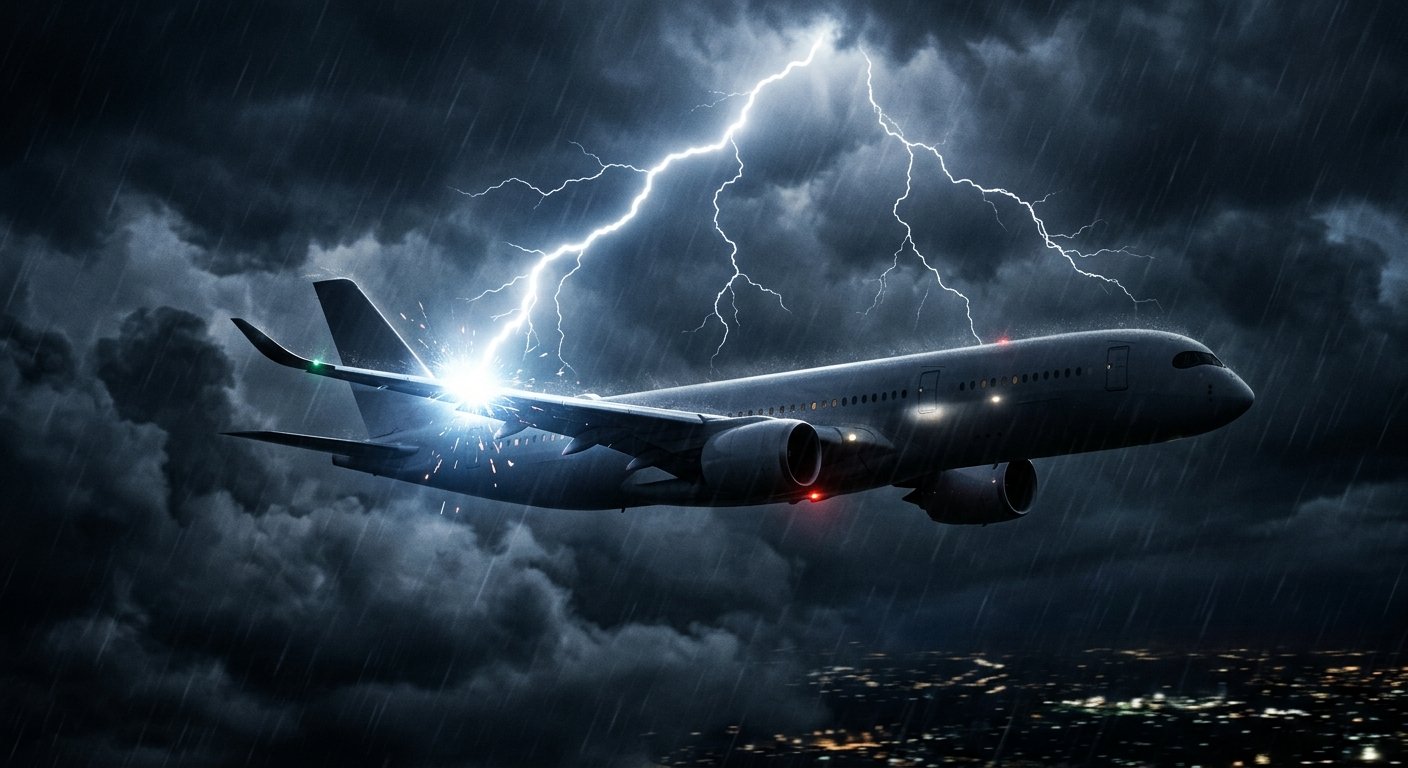
The Electrical Silence of Snowstorms: Why Is There No Lightning?
Snowstorms transform the landscape into a white and silent canvas. But have you ever wondered why this impressive meteorological display lacks the drama of lightning and thunder that accompanies summer storms? The absence of electrical activity in most snowfalls is not a coincidence, but the result of a complex interaction of thermodynamic and microphysical principles in the atmosphere.
Key Factors in the Absence of Winter Electrical Activity
The generation of lightning is a physical process that requires very specific atmospheric conditions for the large-scale separation of electrical charges. In the context of a snowstorm, several critical factors inhibit this electrification mechanism.
In summary, the absence of lightning in snowstorms is due to an atmospheric "recipe" that lacks the key ingredients: intense convection, the simultaneous presence of ice and supercooled water, and vigorous collision dynamics. Although the phenomenon of "thundersnow" (a snowstorm with thunder) exists, it is extremely rare and only occurs under very particular conditions of instability.
Understanding these mechanisms is fundamental for designing effective lightning protection systems, a field in which Aiditec Systems leads with knowledge and cutting-edge technology.